Instruments

YPC 87 piccolo

If you’re in the market for a new piccolo, I’ve got some great news for you! Debuted at the January 2020 NAMM show in Anaheim, the YPC 87 piccolo from Yamaha has some really exciting new features that are hard to find on a piccolo at this price point. Best of all, the Indy Flute Shop is on the list to get one in on trial! Yamaha describes their new piccolo as extremely agile across all registers, moving effortlessly through the octaves. The tone is bright and cheerful but still keeps the deep resonance for which Yamaha piccolos are known, thanks to a thicker body wall construction. The instrument scale is accurate throughout the registers, and dynamic control–particularly soft playing– is excellent, even at low and high registers. Perhaps the most exciting upgrade of the YPC87 is the addition of Straubinger pads, the unmatched leader in pads for clear response and accuracy. If you’re not familiar with Straubinger pads, read up on their unique construction here. Yamaha also debuted a new, more square headjoint cut for this piccolo to improve articulation clarity and response. It is available with a regular or wave headjoint, always a popular feature with the piccolos

Read More

Bass Flute News

You’ve been asking for it for years now, and the time has finally come: the Indy Flute Shop has a bass flute available to rent! Up until now, bass flutes have been a special-order, outright purchase only option due to their price and lack of demand. However, in the past 5 or so years, we have seen a huge increase in interest for bass flutes due to its growing popularity in both flute ensemble pieces and band repertoire. And my job is to give the flutists what they want, so I am happy to present the Trevor James bass flute, available to rent for $165 per month. The Trevor James bass flute is an excellent addition to the low flute family. The hand finished 925 silver lip and riser headjoint enables the bottom register to project freely without compromising the top octaves which can be reached with ease and clarity. Excellent tonal color and dynamic facility combine with soldered tone holes, French style pointed key arms and a well designed mechanism to create a superb and exacting bass flute. Comfortable as a solo performer or in a flute choir, the Trevor James bass flute is handmade to exacting standards without

Read More

C# trill key

This week’s blog is one from the archives…I think I have a few new followers since this video was originally posted in November 2014. I also look a tad more well-rested… This video is a quick overview of the purpose of the C# trill key, a feature available on many flutes in the Indy Flute Shop. Have you ever played a flute with a C# trill key? What do you think–unitasker or absolute necessity? Leave a comment below and let me know! C-Sharp Trill Key

Read More

You get what you pay for, part 2

Last week, I spent some time going over the unfortunate fact that there are a lot of bad instruments out there–specifically piccolos, although you could really substitute any instrument. For example, you can purchase a $30 violin from Ebay, which comes without the bridge set up or the strings tightened! In any case, I hope that I provided some constructive information as to why inexpensive instruments don’t really save you money at all and why you should avoid them. But I get it–most of us don’t have money trees in our back yard, and instruments can be expensive! Now the question remains–how do you sift through all the junk and find a great instrument for a fair price? 1. Do a bit of research. There are literally hundreds of instrument brands out there…how do you know what is good and what isn’t? A quick search of the brand name can give you a lot of information into the quality of the instruments they produce. If the company makes every kind of band and orchestra instrument, that’s usually a red flag. Most reputable instrument companies focus on a certain family of instruments. For example, Gemeinhardt Flutes has been making flutes and

Read More

You get what you pay for: piccolos

I did something I knew I would regret the other day: I went to Amazon and searched “piccolo.” No brand name, no price specifications. As I expected, a plethora of inexpensive instruments in an array of colors and finishes greeted me, promising great sound and intonation for under $200–some as low as $75. I just wish I could shout from the rooftops “IT’S A TRAP! DON’T FALL VICTIM!” But, unfortunately, I can’t–but since I have this way of communicating, let me try to educate you about the downfalls of ordering cheap instruments online. I get it. I really do. I am a faithful Amazon subscriber myself. And, like many others, I have often been disappointed when I order an inexpensive version of something that has ended up falling short of my expectations. That’s why I always keep in mind the tried and true saying, “You get what you pay for.” In other words, if something is cheap, there were undoubtedly some corners cut and sacrifices made to cut down on cost. In the musical instrument world, that can range from simplifying parts (for example, gluing instead of soldering pieces of metal together) to cutting corners in construction (like not properly

Read More

Curved head flutes

This topic is one from the archives, but with updated information! When most flute players think of curved headjoints, they think of alto and bass flutes. But did you know that curved headjoints are available on regular C flutes as well? These instruments, designed for the smaller player in mind, have waxed and waned in popularity over the years, but in my seven years with the flute shop, I have seen them make a well-deserved comeback! As a petite player who began the flute at age 9, I definitely wish that I had started out on a curved headjoint. These flutes have a U bend in the headjoint, shortening the distance from the player’s shoulders to their fingers. This creates less stretch and strain on the left hand, arm, and shoulder. The curved headjoint flute looks like this: There are a few slight disadvantages to a curved headjoint C flute; the sound quality is slightly diminished, but keep in mind that these are designed for beginning flute players. My opinion as a player and teacher is that the development of good hand position outweighs the slightly lower quality sound production. There are a lot of bad habits that can be

Read More

Galway Crusader Headjoint

A few weeks ago, I had the honor (or honour, as the case may be) of seeing Sir James Galway perform some of the greatest standards in flute literature at the Palladium Center for Performing Arts in Carmel. I also was fortunate enough to meet him briefly after the show. All I can say is…wow. It was a truly humbling experience to be able to listen to, and meet, the individual who helped fuel my passion for playing so many years ago, when I would listen to his albums on cassette tape–that dates me a bit, doesn’t it? From Faure’s Fantasie to Chaminade’s Concertino to traditional Irish pieces, Sir James executed every note with a tremendous attention to detail and apparent effortlessness. I think one of the things that amazed me the most was the fluidness and exactness with which his fingers moved over even the most difficult and technically demanding passages. And of course that sound…it just is unlike any other player! Galway, of course, is still an international touring sensation, but along with his wife Jeannie, they have really kindled their devotion to music education and teaching beginners how to excel with the flute. One of their projects

Read More
Azumi AZ3BOP
Features

Product Feature: The Azumi AZ3BOP

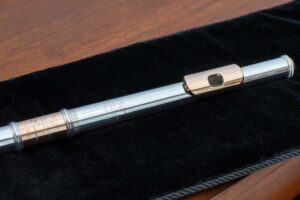
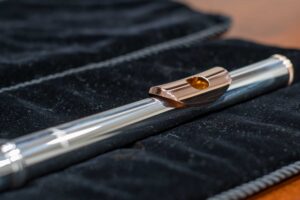
  Azumi flutes has been making dependable, professional sounding step-up flutes at a great price point for years. Azumi flutes feature professional handmade Altus headjoints. This combination allows you to get the great playing characteristics of the legendary Altus flute brand at price great for middle and high school students. The Indy Flute Shop has a limited number of the new Azumi AZ3BOP flute available. This flute features a beautiful rose gold lip plate and crown on its incredible Altus Professional .925 Sterling Silver Z-Cut™ Headjoint. Not only does it provide a rich tone, it also is incredibly stylish! This instrument is available for outright purchase AND on the Indy Flute Shop rent-to-own program. Stop by today to trial this fantastic instrument! Specs: Open Hole, Offset G, B Foot, Gizmo Key, Altus Professional .925 Sterling Silver Z-Cut™ Headjoint, Rose Gold lip plate and crown, .925 Sterling Silver Body, silver-plated keys and mechanism, Altus-Bennett Scale, wide rib construction, French-style pointed key arms, stainless steel springs, French case and cover

Read More
Step Up to Yamaha
Instruments

Step Up Your Instrument With Step Up To Yamaha 2019

  Now that school has been back in session for a few months it is a great time to talk about the benefits of an upgraded instrument.  Manufacturers build student level instruments to be durable and easy to play. This is great for a new player but it can become a detriment as the individual progresses.  Some of the benefits that you gain with an upgraded instrument can include: better tone, improved range, new features and even different materials that are used when making it. Another great time about this time of year is that it is rebate season and the most popular one is Step Up to Yamaha!  The Step Up to Yamaha rebate promotion provides great consumer offers on some of the finest quality instruments from one of the most recognizable brands in the music industry.  This is an opportunity to get a great instrument and receive either a $50 or $100 rebate back from Yamaha.  For more information, please follow the link above, or call us at 317-813-2044 or 1-877-553-5883.

Read More
Instruments

Powell Sonare 905

Powell Sonaré Flutes have been known for years as a dependable, professional sounding step-up flute at a price point to suit the growing player’s needs. Sonare flutes combine a professional Handmade Powell Headjoint with an intermediate flute body. This combination offers the exceptional quality and sound of Powell Flutes at an affordable price. Now, Buffet Crampon and Powell have worked together to produce a brand new Sonare model with some exciting new features! Powell Flutes’ new Powell Sonaré PS-905 professional flute represents the first instrument in the Powell Sonaré line to be classified as a professional-level flute. Like the other Powell Sonaré flutes, the PS-905 is hand-finished at the Powell factory in Maynard, Massachusetts. It features a sterling silver hand cut Powell Signature II, K Style headjoint with an Aurumite 9K lip plate and crown, sterling silver body, Aurumite 9K barrel (hand-finished at Powell), nickel silver with sterling silver plating mechanism, French open hole design, pointed arms, white gold springs, and a French case with leather cover. Powell’s exclusive Aurumite 9K material has an exterior layer of 9K Rose Gold with an interior layer of Sterling Silver. The sound is sunny and animated and very responsive. In addition to all

Read More

FAQ: How to clean your cleaning supplies

I got a comment recently on a past blog post that inspired me to create this post on how to take care of your instrument cleaning supplies! With a little TLC, your cleaning supplies can last for several years. So when your cleaning cloths get a little dirty, save your hard-earned dollars and give them a scrub! Interior cleaning swabs Swab cloths to clean the inside of the flute are generally made of cotton or silk, or a hybrid of the two. When it starts looking (or smelling…) like it needs a cleaning, feel free to hand-wash it or toss it in the washing machine. My best recommendation is to wash with warm water with NO liquid fabric softener. Liquid softeners leave a residue on cloth that can build up over time and can transfer to the metal and pads inside of the flute, so it’s best not to use it. Hang dry or tumble dry low, with like materials. If your cloth has a “raw” edge I would not recommend putting it in the dryer. Exterior polishing cloths Like interior swabs, polishing cloths can be washed in a similar manner, in warm water with no liquid softener, or as

Read More

FAQ: How do I get my instrument repaired?

Have you or your student recently started back to school, only to find that your playing is a bit…rusty? Don’t worry, we won’t judge you. Lots of students take the summers easy when it comes to playing your flute, and you may find that when you pick it back up again, that it is in need of some repair and maintenance. We have you covered! Sending an instrument into Paige’s Music for repair is a very easy process. Here’s what you need to do: How Do I Get My Instrument Repaired? – FAQ | Paige’s Music News about band and orchestra rentals, sales and service in Indiana 1. Call us at 1-800-382-1099 to let us know that your instrument needs service. We’ll arrange for a loaner to be sent to your school so your student isn’t without an instrument for class. TIP: You’ll need to keep your accessories and cleaning items with you so that you’ll have them to use with the loaner until your instrument is returned to you. 2. Our District Manager will bring the loaner with him on his next visit to your school. He will also pick up your instrument and bring it back to the

Read More

Successful beginnings (repost)

Around the beginning of every school year, it gets crazy busy here at the Indy Flute Shop. Since I am a Paige’s Music employee, I also help beginning customers start their students on brand new instruments, which always comes with lots of questions! In between phone calls and lines of customers, though, I always find myself thinking about all those new flute students and how important it is to get them started properly. There’s so much to think about, and it can be difficult to decide what to focus on. For band directors who start multiple students on different instruments, this is even more challenging. Below are some suggestions from Carolyn Keyes, educator and clinician for creating good habits in your beginning flute students, along with some of my own input. Holding the Flute Holding the flute properly is one of the most critical habits to instill in beginners. Techniques such as embouchure and headjoint placement are all for naught if the instrument is not being held correctly. For example, is impossible to produce a good tone if the flute is slipping every few seconds. It is also impossible to play fast passages if the hands are tensed or if

Read More

NFA convention FOMO

The National Flute Association annual convention, held in beautiful Salt Lake City this year, starts on Thursday, and unfortunately I will not be attending this year. My daughter was born in April and I have just returned to work, so making the trip just wasn’t in the cards this year. I’ve been having some serious FOMO (fear of missing out, for those of you not up on the lingo) looking at the convention schedule this year, but thankfully as a member of NFA I will have access to documents and presentations after the convention is over. Here are some of the sessions and performances that I look forward to gleaning information from next week: Wonder Women: Celebrating Our Strength Through Music Chamber Performance Come hear music emphasizing the beauty and power of women’s voices, celebrating the works of female composers. Performed by flutists Cristina Ballatori, Erika Boysen, Brook Ferguson, Mindy Kaufmann, Virginia Broffitt Kunzer, Naomi Seidman, Naomi Senzer, Lindsay Leach-Sparks, Kelly Sulick, and Audra Ziegel. —because who doesn’t need some girl power in their lives? Transforming Artistry: The Legacy of Joachim Andersen Lecture-Recital Follow the trail of Joachim Andersen through St. Petersburg, Berlin, Scheveningen, and Copenhagen. Kyle Dzapo presents her

Read More

Graduate to Yamaha

Hello friends! We have some really exciting news for you this week. As in years past, Yamaha is featuring their “Graduate to Yamaha” promotion for the second quarter of this year (April 1-June 30th) for qualifying instruments. In previous years, these have included the professional-level 500-700 series flutes, as well as wood piccolos. This year, in addition, they are adding the intermediate line to the promotion, for a $50 mail-in rebate! If you’ve been thinking about “graduating” to a better flute, now is a great time. Yamaha intermediate flutes have been a staple of the Indy Flute Shop line-up for years now, and with good reason. These instruments are a perfect mix of durability, dependability, and easy responsiveness of playing. They feature a sterling silver headjoint (300 series) or a sterling head, body, and foot (400 series) as well as a gold-plated lip plate and headjoint interior. These instruments also feature French pointed key arms and a split E mechanism at a very competitive price point. If you purchase or rent one of these instruments from now until June 30th, you will receive a $50 mail-in rebate Visa gift card from Yamaha. Inheriting the many merits of top-of-the-line Yamaha handmade

Read More

FAQ: What should I play?

This week in our series on how to be prepared to try new instruments, we’re tackling the question, “What should I play?” Many students walk into the shop and can feel a bit overwhelmed by all of the choices. Don’t fret! My job is to make this process as easy–and hopefully fun!–as possible. I like to start players out by trying about four flutes at a time. This gives you a wide range of sounds, feel, and tonal colors without overwhelming the player. The Indy Flute Shop is equipped with acoustic panels that are customized to the range of a flute so the instrument sounds great to your ear. Start simple: scales, long tones, or possibly a slow, melodic piece. If you’re stepping up from a student flute to an intermediate one, you should be able to tell a difference pretty quickly in the sound and responsiveness of the instrument. Next, try some low and high notes—anything you’re comfortable playing. Don’t worry about trying to play the highest and lowest notes if you’re not familiar with them yet. Most players notice the biggest difference in these registers. Now is a good time to do a quick evaluation of what you

Read More

FAQ: What should I bring to try a new instrument?

Over the next few weeks, we’re going to be tackling some common questions and concerns that people have when they’re preparing to come and try a new instrument. Whether you have been playing for 1 year or 25, it’s really important to come prepared to test a variety of instruments to best meet you or your student’s needs. This can seem a bit daunting, though, so watch and read on for some helpful tips! Question: I’m coming in to try some new flutes. What should I bring? Answer: This is such an important question! In order to make sure we are setting you or your student up with the perfect flute, it’s really important to make sure that you are getting an idea of how the instrument plays and responds to your unique ability and playing style. The best way to do this is to bring some music, either that you are working on currently, or a piece or two that you are comfortable with. Scale exercises or etude books are always a good idea too, if you have them. We do have some music collections and etude books available in the flute shop as well; these may or may

Read More

Music Madness Sale

Paige’s Music News about band and orchestra rentals, sales and service in Indiana It’s time once again for what is probably our favorite time of year here at Paige’s Music and the Indy Flute Shop: our annual Music Madness Sale! Shoot and Save. From March 21st through the 23rd, you’ll be able to come in to the store for some great savings. You will receive a scratch-off game “ticket”. Scratch off your ticket to reveal your discount. Then, shoot and make a basket to double your savings! Each family gets a warm-up shot, and then you let the real thing fly. The savings range from 5% – 20% off our already low prices. If you are in the market for an instrument, now is the time to come in to scratch, shoot and save! Two great ways to save! Shoot for extra savings or take advantage of our 12 Months Same-As-Cash offer. 12 Months Same-As-Cash Rather have financing options instead of a discount? During the sale you can chose to finance your purchase for 12 months with No Interest. Just one more reason to stop in and see us during our Music Madness Sale March 21st through the 23rd! *Rules

Read More

Flute scales, part 2

A couple of weeks ago, I attempted to dive into the extensive and complicated history of how flutes are built to be in tune with themselves: their scale. To summarize, the flute scale determines how well the notes play in tune to each other, octave to octave, and also determines the timbral balance of the notes. From a mechanical standpoint the flute scale is a function of the following: the diameter of the flute tube or “bore,” the size of each tone hole, the linear location of each tone hole along the flute tube, and the height of each tone hole. Scale should not be confused with the pitch of an instrument. Pitch relates to which “A” the instrument has been designed to produce (e.g., A-440, A-442, etc.) Most instruments made for the U.S. market are typically pitched at A-442, and play well in tune from A-440 to A-444. As we can see, this is a very complex and exact process, and also one with no clear-cut answer or one size fits all method. For flutes that have been built since the mid 1900s, most of them have been constructed using either the Cooper scale or, later, the Bennett scale,

Read More

A quick history of flute scales, Part 1

Okay, the title of this post sounds kind of boring, right? Stay with me–I’m not talking about scales in the etude/exercise sense! This week I’m delving into a history of how flutes are built to be in tune with themselves, or its scale. With the help of the justflutes.com blog, I’m going to attempt to break down the different methods and theories of how flutes have evolved in the quest for better intonation throughout history. Let’s first define what exactly we mean by the “scale” of a flute. In its simplest terms, a scale is a set of proportions which, in the instrument world, can be seen in the different placement of frets on a guitar fingerboard and the curve of a rank of organ pipes or piano strings. In equal temperament, these follow a simple mathematical formula. Multiplying by 1.06 (or 1.0594630948 or 12,-2.) increases the overall length proportionately to eventually reach the octave — exactly. Stringed instruments are well behaved and follow this rule closely. Sadly, flutes are not well behaved. Because we move our lips, intonation is a moving target. Before Theobald Böehm, who is largely responsible for our modern flute construction, the concept of “scale” was

Read More
Categories